The Way Home for Wolf
Read Aloud Picture Book · 32 pages · Preschool to Kindergarten · Orchard Books · Published 2018 · Lexile 600L · AR 3.9
The Way Home for Wolf is a rhyming picture book about a wolf cub who insists he can manage on his own. Rachel Bright wrote it. Jim Field illustrated it. Orchard Books published it in 2018. The story follows Wilf, a small wolf cub who refuses help from his family and friends, walks out into a snowstorm, and gets lost. Three Arctic strangers show him that getting home is easier when you let people help. The book is written as a read aloud picture book, with a reading level of Preschool to Kindergarten.
🎬 Storytime Read Aloud
As an Amazon Associate, I earn from qualifying purchases.
Key Takeaways
- Wolf cub Wilf wants to do everything by himself
- He walks out into the Arctic snow and gets lost
- Three Arctic strangers offer exactly the help he refused
- Wilf learns that pride can mean asking for help
- Rhyming text that is built for read alouds and short enough for bedtime
- From the team behind The Lion Inside and The Koala Who Could
ABOUT THE CREATORS
About the Author and Illustrator
AUTHOR
Rachel Bright
British author and illustrator known for the Love Monster series and rhyming picture books.
ILLUSTRATOR
Jim Field
Illustrator and animation director behind Oi Frog! and the Rachel Bright picture books.
Rachel Bright
Rachel Bright writes rhyming picture books for young readers. With Jim Field she made The Lion Inside, The Koala Who Could, and The Squirrels Who Squabbled. She also created the Love Monster series. She lives near the seaside in the UK.
Illustrator
Jim Field
Jim Field is an illustrator, character designer, and animation director. His warm, expressive art appears in the Rachel Bright picture books as well as Oi Frog! and There Is a Monster Under My Bed. He lives in the UK.
What Happens in the Story
Wolf cub Wilf does not want help. He tells his family he can manage on his own, and he tells his friends the same thing. When the pack settles down for the night, Wilf walks out into the snowy Arctic with his cap, his cape, and his pride, and that is when the snow starts to fall.
Wilf is lost, alone, and cold. One by one, three Arctic strangers appear with exactly the kind of help Wilf said he did not need. By the end of the book Wilf is home, and the pride he has is the kind that asks for help.
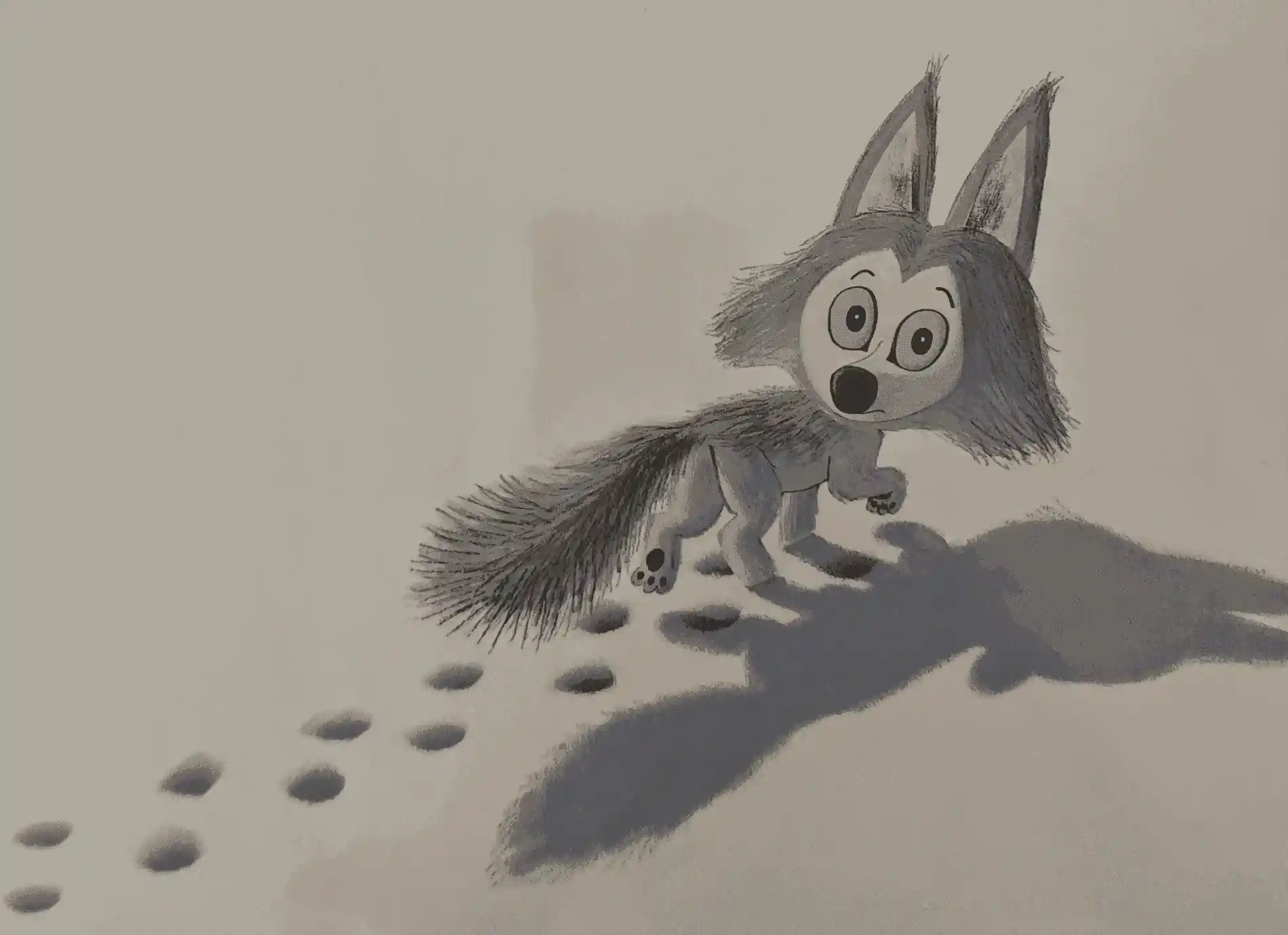
The snow gets thicker, the sun goes down, and Wilf is alone in the Arctic for the first time.
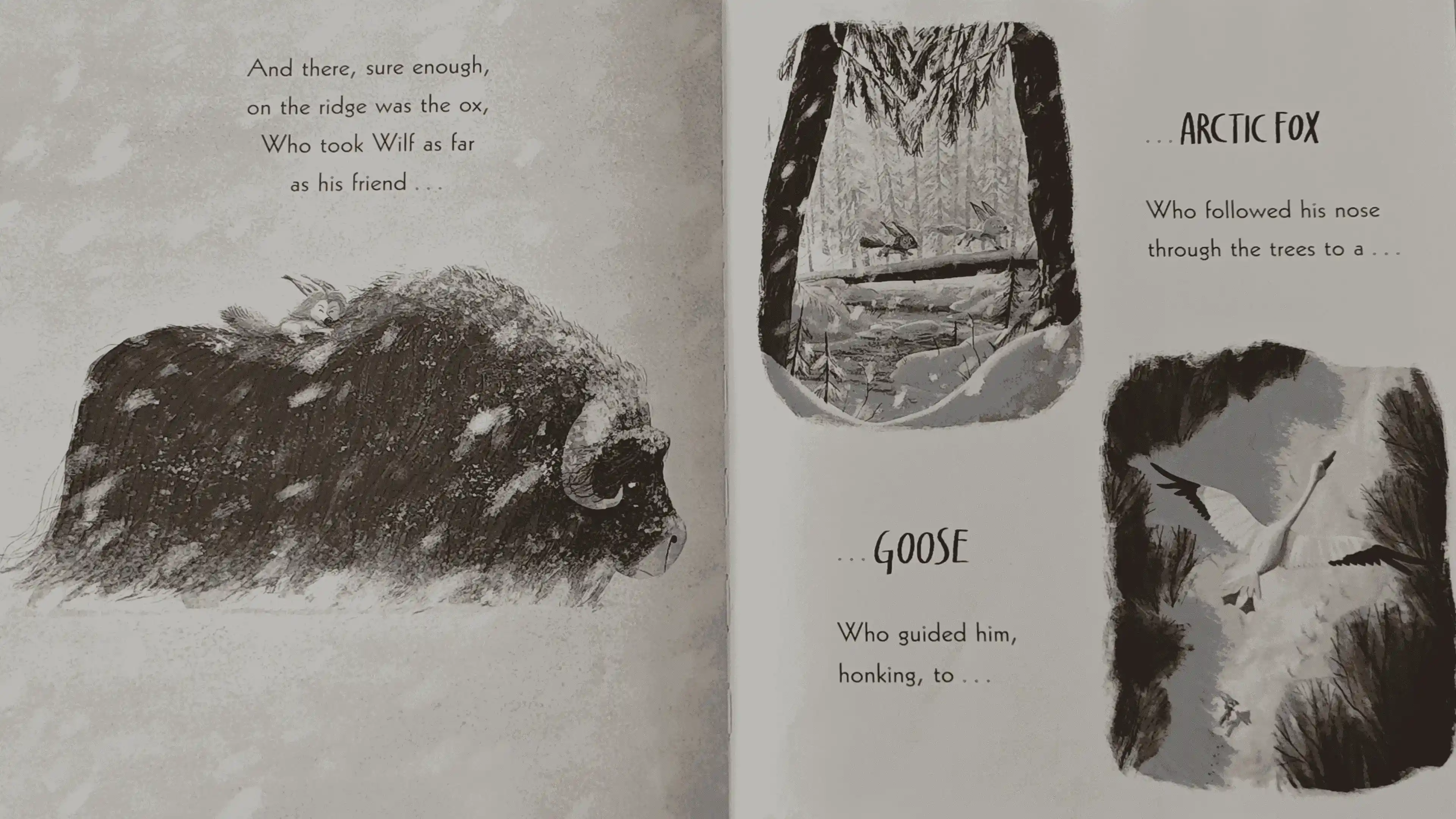
Three Arctic strangers show up, one at a time, with exactly the kind of help Wilf said he did not need.
Why It Works for Stubborn Kids
The book reads almost as a chant. Wilf’s stubborn refusal lines give the kid a way to chant “I can do it by myself” on every page, and the page turns line up with the help he eventually accepts. The pride at the end is not the pride that refuses help. It is the pride that gets home because of help. That distinction is the part the kid who insists on doing everything by themselves actually needs to hear.
Jim Field’s art does the same kind of work it did on The Lion Inside. Wilf starts the book as a small figure in a big white landscape, and the strangers who show up are drawn the same way small things get drawn in snowy scenes: as warm shapes against the cold. By the end of the book the family scene is large enough to fill the page.
The pride at the end is not the pride that refuses help. It is the pride that gets home because of help. — The Way Home for Wolf
Who This Book Is For
This book works best for the kid who insists on doing everything by themselves, and for the parent who has been trying to explain that asking for help is not the same as being weak. Wilf says out loud what that kid is thinking, and the story lets him change his mind without losing face.
It also works as a gentle entry point into the Rachel Bright and Jim Field picture books. Once a child has met Wilf, the same rhymes and the same warm art are waiting in The Lion Inside and The Koala Who Could. See our The Way Home for Wolf Read Aloud for the full video.
Did this read aloud help you find your next bedtime book?
 Buy Me a Coffee
Your support helps us keep adding new read aloud reviews.
Frequently Asked Questions
What is the lesson in the book?
The book does not state a lesson out loud. Wolf cub Wilf insists he does not need help, walks out into the snow, and gets lost. Three Arctic strangers show up and help anyway. By the end of the book Wilf is home, and the pride he has is the kind that asks for help.
Is this book different from The Lion Inside?
Yes. The Lion Inside is about a small mouse who wants to roar. The Way Home for Wolf is about a small wolf who insists he does not need any help. Both books are by Rachel Bright and Jim Field and use the same rhyming structure, but the lessons land differently and the settings are different.
Why do kids like this book?
The book reads almost as a chant. Wilf’s stubborn refusal lines give the kid a way to chant “I can do it by myself” on every page, and the resolution lands the way the same kind of resolution lands in The Lion Inside and The Koala Who Could: the kid has been waiting for this, and the page turn confirms it.
What books are like this one?
If your child likes this book, try The Lion Inside, The Koala Who Could, and The Squirrels Who Squabbled, all by Rachel Bright and Jim Field. For similar Arctic energy and a longer read aloud, try The Polar Bear Son’s Secret by Lydia Dabcovich. For a stubborn-kid book in a different setting, try Thank You, Omu by Oge Mora.
What reading level is this book?
The text sits at Lexile 600L and AR 3.9, which means grown ups will do most of the reading during story time. It is written to be read out loud, with short rhyming lines and a page turn rhythm that matches the story. Kids can follow the pictures before they can read the words.
Is this book part of a series?
No. The Way Home for Wolf is a standalone picture book. Rachel Bright and Jim Field made three other standalone titles together: The Lion Inside, The Koala Who Could, and The Squirrels Who Squabbled. The characters do not carry over between the books, but the rhyme and the art do.